
SEO vs AEO: What’s the Difference and Why It Matters in
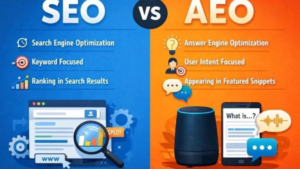
In today’s fast-changing digital world, businesses are no longer focusing only on Search Engine Optimization (SEO). A new strategy called Answer Engine Optimization (AEO) is gaining importance with the rise of AI assistants and voice search.
SEO vs AEO for digital marketing is becoming a major topic in modern online marketing strategies. SEO helps websites rank higher on search engines like Google, while AEO focuses on providing direct answers for AI-powered search and voice assistants.
Understanding SEO vs AEO for digital marketing helps businesses improve online visibility, increase organic traffic, enhance voice search optimization, and improve AI search performance in the future of digital marketing.
By combining SEO and AEO in digital marketing, businesses can create a stronger online presence, improve search rankings, and prepare for the future of AI-driven search engines.
What is SEO (Search Engine Optimization
The technique of increasing a website’s visibility on search engines like Google, Bing, and Yahoo is known as search engine optimization, or SEO. The primary goal of SEO is to rank higher in search engine results pages (SERPs) for relevant keywords, helping businesses attract organic (non-paid) traffic.
In simple terms, SEO ensures that your website appears when users search for products, services, or information related to your business.
Today, understanding **SEO vs AEO for digital marketing** is important for businesses adapting to AI-powered search and modern online marketing strategies. The rise of voice assistants and conversational AI has increased the importance of **Answer Engine Optimization (AEO)** alongside traditional SEO techniques.
Businesses that combine **SEO vs AEO for digital marketing** strategies can improve organic traffic, search visibility, and AI-driven customer engagement in the future of digital marketing.
What is AEO (Answer Engine Optimization)?
Answer Engine Optimization (AEO) is the practice of optimizing material, particularly for AI-powered platforms, voice assistants, and search features like featured snippets, to give clear, concise, and accurate responses to user inquiries.
AEO aims to be the precise response that users see or hear when they search, in contrast to traditional SEO, which concentrates on ranking web pages. As companies adjust to AI-powered search and conversational search experiences, understanding **SEO vs. AEO for digital marketing** is becoming crucial.
While AEO helps content show up in voice assistant and AI-generated responses, SEO increases a website’s visibility on search engines like Google.. The growing importance of **SEO vs AEO for digital marketing**, **voice search optimization**, and **AI search optimization** is transforming modern digital marketing strategies.
In the future of digital marketing, companies may increase organic traffic, search exposure, and consumer interaction by combining SEO and AEO strategies.
AEO is designed for modern search experiences on platforms like Google, voice assistants, and AI tools such as ChatGPT.
Why AEO is Growing Fast

AEO (Answer Engine Optimization) is the future of digital marketing. As users rely more on AI tools and voice assistants, businesses must focus on delivering direct and valuable answers. By combining AEO with traditional SEO strategies, businesses can improve visibility, build authority, and stay ahead in the evolving search landscape.
Understanding SEO vs AEO for digital marketing is essential for adapting to modern search behavior and AI-powered search experiences. While SEO helps websites rank higher on search engines like Google, AEO helps content appear in featured snippets, voice assistant responses, and AI-generated answers.
The growing importance of SEO vs AEO for digital marketing, AI search optimization, and voice search optimization is transforming how brands connect with online audiences. Businesses that combine both SEO and AEO strategies can improve organic traffic, enhance user engagement, and achieve long-term digital marketing success.
Benefits of Combining SEO & AEO
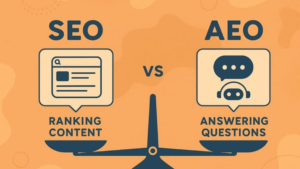
In today’s digital landscape, relying only on traditional SEO is no longer enough. With the rise of AI-driven search and instant answers, combining Search Engine Optimization (SEO) and Answer Engine Optimization (AEO) has become the most effective strategy.
SEO vs AEO for digital marketing is now essential for businesses that want to improve search visibility and stay competitive in AI-powered search results.
SEO helps your website rank and attract organic traffic, while AEO ensures your content becomes the direct answer users see in AI search engines, voice assistants, and featured snippets. Together, they create a powerful and future-ready digital marketing approach.
Maximum Online Visibility
SEO helps your website appear in search engine results on platforms like Google, while AEO ensures your content is featured in snippets, voice search, and AI-generated answers on tools like ChatGPT and voice assistants.
By combining SEO and AEO for digital marketing, businesses can:
- Improve online visibility
- Increase organic website traffic
- Enhance voice search optimization
- Rank in AI-powered search results
- Build long-term digital authority
Understanding SEO vs AEO for digital marketing helps brands prepare for the future of AI-driven search and modern digital marketing strategies.
More Traffic + More Exposure with SEO & AEO
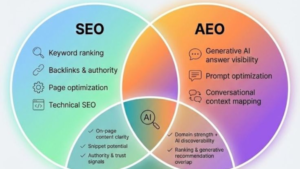
In modern digital marketing, success is not just about getting clicks—it’s about being seen everywhere your audience searches. By combining Search Engine Optimization (SEO) and Answer Engine Optimization (AEO), businesses can achieve both high website traffic and maximum brand exposure.
Traffic Through SEO (Search Engine Optimization)
Generating consistent website traffic is one of the main goals of digital marketing, and Search Engine Optimization (SEO) is the most powerful way to achieve it organically. SEO helps your website appear in front of users who are actively searching for your products, services, or information on search engines like Google.
What is Traffic Through SEO?
Traffic through SEO (Search Engine Optimization) refers to the visitors who come to your website from organic (unpaid) search results on search engines like Google.
This type of traffic is generated when your website appears in search results for relevant keywords, and users click on your link to visit your site.
How Traffic Through SEO Works

Traffic through SEO (Search Engine Optimization) is generated when users find your website in organic (unpaid) search results and click on it. It is a structured process that connects user intent, search engine algorithms, and optimized content to drive visitors to your website.
Search engines like Google analyze millions of pages and show the most relevant results based on what users search. Understanding SEO vs AEO for digital marketing helps businesses optimize their content not only for traditional search rankings but also for AI-powered answer engines and voice search.
While SEO focuses on improving website visibility and organic traffic, AEO (Answer Engine Optimization) focuses on delivering direct answers through AI assistants, featured snippets, and conversational search experiences.
By combining SEO and AEO for digital marketing, businesses can:
- Increase organic traffic
- Improve search engine rankings
- Enhance AI search visibility
- Optimize for voice search
- Build stronger online authority
As digital search continues to evolve, SEO vs AEO for digital marketing is becoming essential for brands that want to succeed in both traditional and AI-driven search environments.
User Searches a Query (Detailed Explanation)
The step “User Searches a Query” is the starting point of the entire SEO process. It represents the moment when a user enters a word, phrase, or question into a search engine like Google to find information, products, or services.
This step is crucial because everything in SEO is built around what users search for. In modern digital strategies, understanding user intent is also essential for SEO vs AEO for digital marketing, where SEO focuses on ranking web pages and AEO focuses on delivering direct answers through AI-powered search and voice assistants.
Why Businesses Need Both SEO & AEO
In today’s digital landscape, relying on a single strategy is no longer enough. The way people search for information has evolved—from typing keywords to asking questions and expecting instant answers. This shift makes it essential for businesses to combine Search Engine Optimization (SEO) and Answer Engine Optimization (AEO) for maximum results.
EO Complete Search Visibility with SEO & A
In today’s digital landscape, relying on a single strategy is no longer enough. The way people search for information has evolved—from typing keywords to asking questions and expecting instant answers. This shift makes it essential for businesses to combine Search Engine Optimization (SEO) and Answer Engine Optimization (AEO) for maximum results. By integrating SEO vs AEO for digital marketing, businesses can improve search visibility, attract organic traffic, and provide direct answers that match modern user intent. While SEO focuses on ranking websites on search engines, AEO ensures content is optimized for AI-powered search, voice assistants, and featured snippets. Together, SEO vs AEO for digital marketing creates a stronger online presence, enhances user experience, and helps brands stay competitive in the evolving digital world. Adopting SEO vs AEO for digital marketing strategies allows businesses to reach audiences more effectively and build long-term digital growth.
What is Complete Search Visibility?
Complete Search Visibility refers to a brand’s ability to appear across all possible search touchpoints—not just in traditional search engine results, but also in AI-generated answers, voice search responses, featured snippets, and other modern search formats.
In simple terms:It means your brand is visible everywhere users search for information
Understanding the Concept of Complete Search Visibility
To truly understand Complete Search Visibility, you need to look at how search behavior has evolved over time. Earlier, users depended only on traditional search engines like Google to find information by clicking on links. Today, the process is very different.Users now expect fast, direct, and accurate answers—often without even visiting a website. This shift has transformed how businesses must approach visibility online.
Modern Search (New Model) – Detailed Explanation
The modern search model represents the latest evolution in how users find information online. Unlike traditional search, where users typed short keywords and browsed multiple websites, modern search is focused on instant answers, conversational queries, and AI-driven results. Today, users expect fast, accurate, and direct responses—often without needing to click on any links.
Shift from Traditional to Modern Search
The way people search for information online has changed dramatically over the years. What started as simple keyword-based searching has now evolved into a smart, AI-driven, answer-focused experience. Understanding this shift is essential for businesses that want to stay relevant in today’s digital world.
Modern Search Model (New Approach)
The Modern Search Model represents a major transformation in how users find information online. Unlike the traditional approach, where users searched using short keywords and browsed multiple websites, the modern model focuses on instant answers, user intent, and AI-driven experiences.
Today, search is no longer just about finding links—it’s about getting the right answer instantly.
What is the Modern Search Model?
The Modern Search Model is an advanced approach to how users find information online, where search systems use artificial intelligence, user intent, and real-time data to deliver instant, accurate, and relevant answers—often without requiring users to click on multiple websites.
Unlike traditional search, which focused mainly on showing a list of links, the modern search model focuses on providing direct answers and a seamless user experience.
re Idea Behind the Modern Search Model
The core idea behind the Modern Search Model is simple but powerful:
Understand the user’s intent and deliver the most accurate answer instantly
Unlike traditional search, which focused mainly on matching keywords, the modern search model is designed to think like a human—understanding context, meaning,
Keywords vs User Intent
In modern digital marketing, one of the most important concepts to understand is the difference between keywords and user intent. While keywords were once the foundation of SEO, today’s search systems focus more on understanding what users actually mean and need.
Search engines like Google have evolved to prioritize intent over exact keyword matching, making this shift essential for successful content strategies.
From Keywords to User Intent
One of the most important shifts in modern digital marketing is the transition from keyword-focused SEO to user intent-driven search. This change has redefined how content is created, optimized, and delivered.
Earlier, ranking on search engines like Google depended mainly on matching exact keywords. Today, success depends on understanding what the user actually wants
What is Voice Search?
What is Voice Search?
Voice search allows users to search the internet by speaking into devices like smartphones or smart assistants.
Platforms like Google support voice queries through mobile devices and smart speakers.
Example:
- Typed: “SEO services Kerala”
- Voice: “Which is the best SEO service in Kerala?”
Voice search is more natural, detailed, and question-based
What is AEO (Answer Engine Optimization)?

AEO (Answer Engine Optimization) is the process of optimizing your content to provide clear, direct, and accurate answers to user questions, so it can be easily picked up by search engines and AI-powered platforms.
Unlike traditional SEO, which focuses on ranking web pages, AEO focuses on delivering instant answers to users through voice search, featured snippets, and AI-powered search experiences.
Understanding SEO and AEO for digital marketing is important for businesses that want to improve online visibility, search performance, and user engagement in the modern digital landscape.
By using effective SEO and AEO for digital marketing strategies, businesses can improve organic traffic, optimize content for AI search engines, and build a stronger online presence for the future of digital marketing.
Why AEO is the Future of SEO
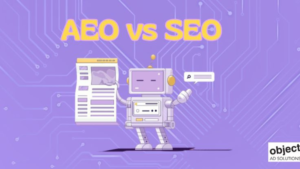
The digital landscape is evolving faster than ever, and so is the way people search for information online. For years, SEO (Search Engine Optimization) has been the foundation of online visibility, helping websites rank higher on search engines like Google and drive organic traffic.
However, the rise of artificial intelligence, voice search, and changing user behavior has introduced a new concept: AEO (Answer Engine Optimization).
Understanding SEO vs AEO for digital marketing is now essential for businesses that want to stay competitive in the future of online search. While SEO focuses on improving website rankings, AEO focuses on delivering direct, accurate, and conversational answers to users through AI-powered search engines and voice assistants.
AEO is not just a trend—it represents a major shift in how information is discovered, consumed, and delivered. As search engines continue transforming into answer engines, SEO vs AEO for digital marketing is becoming one of the most important strategies for improving online visibility, AI search performance, and user engagement.
By combining SEO and AEO for digital marketing, businesses can:
- Improve organic search rankings
- Increase website traffic
- Optimize content for AI-driven search
- Enhance voice search visibility
- Build long-term digital authority
The future of digital marketing belongs to brands that adapt to both SEO and AEO strategies, creating content that ranks well and also provides instant answers users are looking for.
author:athul