
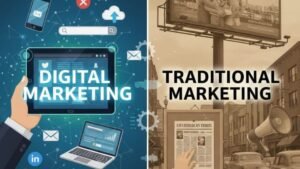
Marketing is the foundation of every successful business. It connects brands with customers, builds awareness, and drives sales. Over time, marketing has evolved from traditional advertising methods such as newspapers, radio, and television to more advanced digital advertising strategies powered by the internet and modern technology.
Today, the discussion around digital vs traditional advertising has become increasingly important as businesses decide where to invest their resources. Digital advertising offers advantages like global reach, precise audience targeting, real-time analytics, and cost-effectiveness. It allows brands to engage directly with their audience through platforms like social media, search engines, and email, making campaigns more measurable and adaptable.
On the other hand, traditional advertising continues to deliver strong value through its credibility, tangibility, and local impact. Channels such as print media, billboards, television, and radio help build trust and create lasting impressions, especially among audiences who rely on offline media.
In today’s competitive landscape, choosing between digital vs traditional advertising is not about selecting one over the other. Instead, it’s about understanding how each approach contributes to overall marketing success. Businesses that combine the speed and precision of digital with the trust and reach of traditional methods can create a more powerful and effective integrated marketing strategy.
Ultimately, mastering the balance between digital and traditional advertising enables brands to connect with diverse audiences, strengthen their market presence, and achieve sustainable long-term growth.
What is Digital Marketing?

Digital marketing refers to the promotion of products or services through digital channels such as search engines, websites, social media platforms, email, and mobile applications. It enables businesses to connect with their audience online, offering real-time interaction and broader reach across global markets.
In the context of digital vs traditional advertising, digital marketing stands out for its ability to deliver targeted communication, data-driven decision-making, and measurable results. Businesses can track user behavior, monitor campaign performance, and make instant adjustments to improve outcomes. This level of precision makes digital advertising highly efficient and cost-effective compared to traditional methods.
Unlike traditional advertising, which relies on one-way communication through offline channels, digital marketing encourages two-way engagement. Customers can interact with brands, provide feedback, and participate in conversations, creating a more personalized and dynamic experience.
As the comparison of digital vs traditional advertising continues to evolve, digital marketing plays a crucial role in helping businesses stay competitive. However, its true strength is maximized when combined with traditional strategies, creating a balanced and impactful marketing approach.
Key Components of Digital Marketing
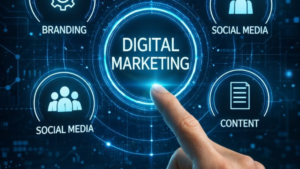
- Search Engine Optimization (SEO)
SEO is the process of optimizing a website to rank higher on search engines. It helps businesses attract organic traffic and improve online visibility.
-
Social Media Marketing (SMM)
Social media platforms like Instagram, Facebook, and LinkedIn are used to promote brands, interact with customers, and build communities.
-
Search Engine Marketing (SEM)
SEM involves paid advertising, such as Google Ads, where businesses pay to appear in search results.
-
Content Marketing
This includes blogs, videos, infographics, and other content designed to educate and engage customers.
-
Email Marketing
Email campaigns help businesses communicate directly with customers through personalized messages and offers.
-
Influencer and Affiliate Marketing
Brands collaborate with influencers or partners to promote their products and expand their reach.
What is Traditional Marketing?
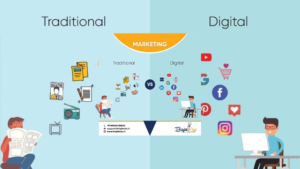
Traditional marketing refers to conventional offline methods used to promote products and services through channels such as newspapers, television, radio, billboards, and print media. These methods have been used for decades and are designed to reach a broad audience through mass communication.
In the context of digital vs traditional advertising, traditional marketing stands out for its credibility, familiarity, and strong local impact. It does not rely on the internet and typically follows a one-way communication model, where businesses deliver messages to consumers without direct or immediate interaction. Despite this limitation, traditional advertising remains highly effective in building brand awareness and trust, especially among audiences who prefer offline media.
Unlike digital advertising, which focuses on precise targeting and real-time engagement, traditional marketing emphasizes wide reach and consistent brand visibility. Its tangible formats—such as printed materials and outdoor ads—often leave a lasting impression on consumers.
As the landscape of digital vs traditional advertising continues to evolve, traditional marketing still plays a vital role. When combined with digital strategies, it helps businesses create a well-rounded and impactful marketing approach that reaches both online and offline audiences effectively.
Traditional marketing typically involves one-way communication, where businesses deliver messages to a broad audience without direct interaction.
Key Components of Traditional Marketing
- Television advertisements
- Radio commercials
- Newspaper and magazine ads
- Billboards and outdoor advertising
- Flyers, brochures, and pamphlets
- Direct mail campaigns
Traditional marketing is especially effective for brand awareness and local promotions⸻
Evolution of Marketing

Over time, marketing has changed significantly. In the early stages, businesses relied entirely on traditional advertising methods such as print media, radio, and television. While these approaches were effective in reaching mass audiences, they were limited in terms of targeting, reach, and performance measurement.
With the rise of the internet, the landscape of digital vs traditional advertising began to shift dramatically. Digital advertising emerged as a powerful alternative, enabling businesses to connect with audiences on a global scale.
It introduced key advantages such as real-time interaction, precise audience targeting, and data-driven analytics—allowing marketers to measure and optimize their campaigns more effectively.
How Digital Advertising Transformed Marketing
This transformation revolutionized the marketing industry by enabling:
* Global reach beyond geographical limitations
* Real-time engagement with customers through digital platforms
* Advanced analytics for smarter decision-making
* Cost-effective strategies with measurable return on investment (ROI)
The Continued Role of Traditional Advertising
Despite the rapid growth of digital marketing, traditional advertising has not disappeared. Instead, it has evolved to complement digital strategies.
Traditional methods remain effective for:
* Building brand trust and credibility
* Enhancing local visibility
* Creating strong brand recall through repeated exposure
Final Insight
When analyzing digital vs traditional advertising, it’s clear that both play important roles in modern marketing. Digital advertising drives precision and measurable growth, while traditional advertising strengthens brand presence and trust.
The most successful businesses today combine both approaches to create a balanced and impactful marketing strategy.
Today, the discussion around digital vs traditional advertising is no longer about replacement but integration. Businesses that adapt to this evolution and combine both strategies effectively can create a more impactful and balanced marketing approach, ensuring sustainable growth in a competitive market.
:
- Global accessibility
- Real-time analytics
- Personalized communication
Today, marketing is no longer about choosing one method over the other. Instead, businesses are adopting integrated strategies that combine both digital and traditional approaches.
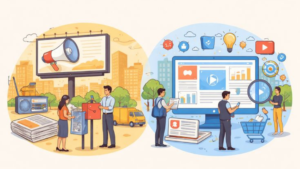
Key Differences Between Digital Marketing and Traditional Marketing
-
Reach and Audience
Digital marketing offers a global reach, enabling even small businesses to connect with customers across different countries through online platforms.
In contrast, traditional advertising is geographically limited. Channels like newspapers and billboards typically reach audiences only within a specific location.
2. Cost and Budget
Digital marketing is cost-effective, making it ideal for startups and small businesses. Campaigns can be launched with a small budget while still delivering measurable results.
Traditional advertising often requires a higher investment. TV commercials, print ads, and outdoor billboards can be expensive and less accessible for smaller businesses.
3. Targeting and Personalization
Digital advertising allows precise audience targeting based on demographics, interests, behavior, and location. Better conversion rates and increased engagement result from this.
Traditional advertising follows a mass marketing approach, reaching a broad audience without detailed targeting or personalization.
4. Measurability and Analytics
One of the biggest advantages of digital marketing is real-time tracking. Businesses can measure:
* Clicks
* Impressions
* Conversions
* Customer behavior
This helps in optimizing campaigns for better performance.
Traditional advertising lacks detailed analytics, making it difficult to measure effectiveness accurately.
5. Interaction and Engagement
Digital marketing enables two-way communication, allowing customers to interact with brands through comments, messages, and reviews.
Traditional advertising is mostly one-way communication, where businesses share messages but receive limited direct feedback from customers.
When comparing Digital vs Traditional Advertising, digital marketing stands out for its reach, affordability, targeting, and measurability. However, traditional advertising still holds value in building brand credibility and local awareness.
-
Speed and Flexibility
Digital campaigns can be launched instantly and modified at any time. Businesses can adjust their strategies based on performance data.
Traditional campaigns take longer to create and implement. Once published, making changes is difficult and costly.
-
Tangibility and Trust
Traditional marketing provides a physical presence through printed materials, which many customers find trustworthy.
Digital marketing builds trust through online reviews, testimonials, and engagement rather than physical materials.
-
Conversion and ROI
Digital marketing generally delivers higher conversion rates due to precise targeting and personalization.
Traditional marketing is effective for awareness but may have lower conversion rates due to its broad approach.
Advantages of Digital Marketing
- Global reach and scalability
- Cost-effective for businesses of all sizes
- Real-time performance tracking
- Highly targeted campaigns
- Increased customer engagement
- Easy optimization and updates
Limitations of Digital Marketing
- Requires internet access
- High competition
- Frequent algorithm changes
- Privacy and data security concerns
- Requires technical knowledge
Advantages of Traditional Marketing
- Strong brand credibility
- Effective for local audiences
- Tangible and memorable materials
- Wide reach through mass media
- Trusted by older demographics
Limitations of Traditional Marketing
- High cost
- Limited targeting
- Difficult to measure ROI
- No real-time interaction
- Less flexibility
Digital marketing is ideal when:
- You want global reach
- You have a limited budget
- Your audience is active online
- You need measurable results
- You want fast and flexible campaigns
When to Use Traditional Marketing
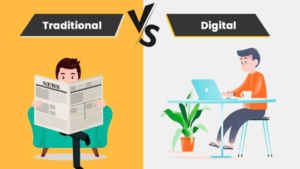
Traditional Marketing is Suitable When:
* Targeting local or regional audiences
* Promoting offline or location-based businesses
* Building strong brand credibility and trust
* Running large-scale awareness campaigns (TV, radio, newspapers, billboards)
Traditional methods are especially effective for reaching audiences who may not be highly active online and for creating a tangible brand presence.
Integrated Marketing: The Best of Both Worlds
In 2026, the smartest approach is not choosing between digital and traditional marketing—but combining both. This strategy is known as integrated marketing.
Integrated marketing ensures that your brand message is consistent across all channels—both online and offline—creating a seamless customer experience.
Example: Digital vs Traditional Advertising (Integrated Approach)
Imagine a new restaurant launch:
* Traditional Advertising:
* Newspaper ads and local radio promotions
* Flyers distributed in nearby areas
* Outdoor banners to attract local attention
* Digital Advertising:
* Social media campaigns on platforms like Instagram and Facebook
* Google Ads targeting nearby users
* Influencer collaborations and online reviews
When combined, these strategies reinforce each other:
* Traditional ads build trust and local visibility
* Digital ads drive engagement, online orders, and measurable results
Why Integrated Marketing Works Best
* Expands reach across both offline and online audiences
* Strengthens brand consistency
* Improves customer engagement at multiple touchpoints
* Delivers better ROI through combined efforts
When comparing Digital vs Traditional Advertising, neither is inherently better—the effectiveness depends on your goals. However, businesses that integrate both strategies gain a competitive advantage by reaching customers wherever they are.
- A company runs a TV ad and promotes it on social media
- A billboard includes a QR code linking to a website
- Print ads direct customers to online platforms
This approach ensures maximum reach, engagement, and conversion.
Real-World Example
Imagine a local restaurant launching a new menu:
- Using traditional marketing, they distribute flyers and place ads in local newspapers.
- Using digital marketing, they promote the menu on Instagram and run targeted ads.
By combining both strategies, the restaurant reaches both offline and online audiences, increasing its chances of success.
Future of Marketing
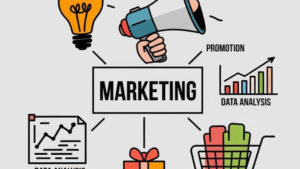
Digital vs Traditional Advertising: The Future of Marketing
The future of marketing is being shaped by rapid advancements in technology, data-driven strategies, and personalized customer experiences. In this evolving landscape, the comparison between digital vs traditional advertising has become more important than ever. Businesses are no longer choosing one over the other—they are learning how to combine both for maximum impact.
Digital advertising is growing at an unprecedented rate, powered by innovations in artificial intelligence (AI), marketing automation, and advanced analytics. It allows brands to reach highly targeted audiences, track performance in real time, and optimize campaigns for better results. From social media ads to search engine marketing, digital channels offer flexibility, scalability, and measurable ROI.
On the other hand, traditional advertising continues to hold strong value, especially in building brand credibility and trust. Channels like television, radio, newspapers, and billboards are highly effective for reaching local audiences and creating lasting brand impressions. Traditional methods often provide a sense of authenticity that digital platforms sometimes lack.
Rather than competing, digital and traditional advertising now work best when integrated into a unified strategy. This omnichannel approach helps businesses maintain consistent messaging across multiple platforms, improving brand recognition and customer engagement.
In conclusion, the debate around digital vs traditional advertising is no longer about which is better, but how effectively they can be combined. Businesses that embrace innovation while leveraging the strengths of both approaches will be better positioned to achieve long-term marketing success in an increasingly competitive world
Conclusion
Digital vs Traditional Advertising: A Balanced Approach for Modern Marketing